
Garden Soils
3/WAY
General-purpose three-component landscape soil blend.
Bulk$50.00 Bulk / per yard
View Product Not sure what you need?Tell us what you’re planting or building and we’ll help you find the right material.Find My Soil →
Complete soils for raised beds, gardens, planting areas and lawn projects. Start with the job, then compare current products and formats.
Compare current images, descriptions, formats, prices and availability. Open a product for complete purchasing details.
General-purpose three-component landscape soil blend.

Fine-textured top-dressing blend for lawn leveling, overseeding and turf renovation.

Nutrient-rich organic garden soil for vegetables, flowers, raised beds and landscape planting.
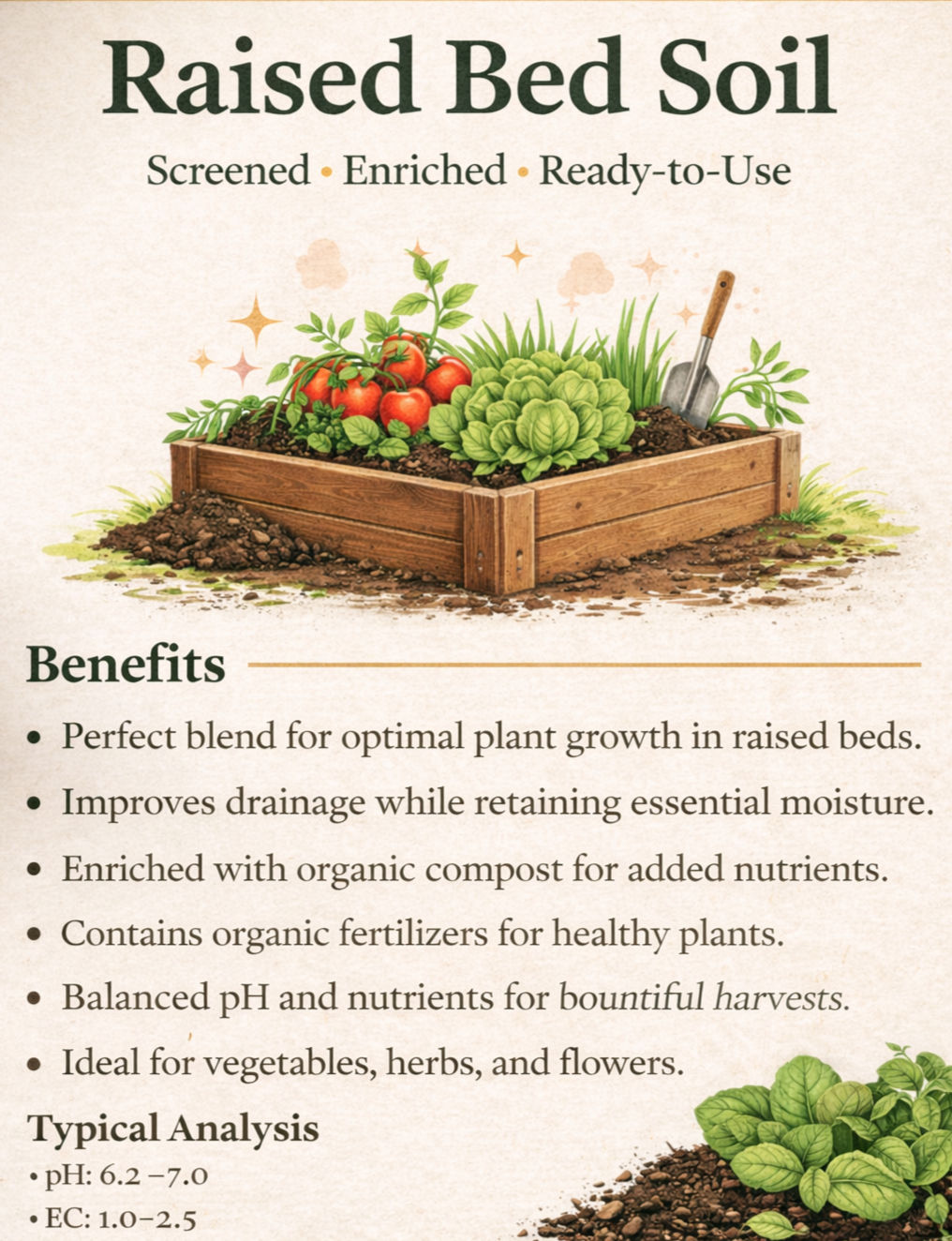
Garden soil blend specifically for raised beds and planter boxes.
Bulk soil for specification-driven bioretention, rain-garden and stormwater landscape applications.
This distinction prevents buying full-depth soil when a smaller amendment application fits—or filling a new bed with compost alone.
Use complete garden or raised-bed soil when creating most of the planting volume.
Use compost or another amendment where a usable soil profile already exists and the goal is improvement.
Raised beds, in-ground vegetables, ornamental beds and lawns require different depth and material decisions.
Raised Bed Soil is the practical purpose-built starting point. Premium Organic Garden Soil, Gardener’s Organic Secret and Growers Professional can be legitimate premium choices.
Learn more →Build a new in-ground root zone or improve established soil without confusing the two jobs.
Learn more →Separate planting soil, amendment and surface mulch into the layers they serve.
Learn more →Lawn Top Dressing is for thin applications over established turf—not automatically a deep new-lawn root zone.
Learn more →The best next step depends on the decision still in front of you.
Compare new-fill and premium raised-bed paths.
Learn more →Separate complete root-zone soil from amendment.
Learn more →Turn measured area and depth into cubic yards.
Learn more →Use the project details—not the broad label alone—to choose the next step.
Use complete soil when building most of a new root zone. Use compost to amend appropriate soil already in place.
An existing bed often needs measured compost or another amendment rather than another full volume of fill soil.
Do not automatically use garden soil as container media. Use the Pots & Containers path to choose a medium for the container.
Measure the actual area and planned depth, then use the calculator to convert the volume into cubic yards.
Use Find My Soil for product selection or go directly to the calculator when the material is already known.
Compare root-zone choices
This category compares garden and raised-bed root-zone materials. It is not the replacement for a project decision, a product purchase page or a guide to the many things people call topsoil.
Not necessarily. The catalog shows products Specialty Soils offers; current stock, format, lead time and final price are confirmed when you order.
Use Find My Soil for project-based guidance, or compare up to three products before adding them to your material list.
Yes. Add any products to My Materials, enter quantities and notes, then share, print or email the list.