
Reviewed by Specialty Soils Updated August 21, 2026
Bulk material is sold by volume, usually the cubic yard. Measure the project, plan the pile, and decide how the material will move after delivery.
Bulk buying is a volume-and-logistics decision
One cubic yard is 27 cubic feet: a volume 3 feet long × 3 feet wide × 3 feet high. It is not a fixed weight. Material type and moisture change weight, which is why vehicle payload and truck selection require separate review.
Measure before choosing a quantity
- Divide the project into simple shapes.
- Measure length and width—or diameter—for each area.
- Use the actual finished depth required for that project.
- Calculate each section, then combine them.
- Keep any deliberate settling or measurement allowance separate from the geometric result.
Use internal dimensions for raised beds. For an existing lawn or mulch bed, calculate only the additional layer you intend to apply.
Plan the pile, not just the purchase
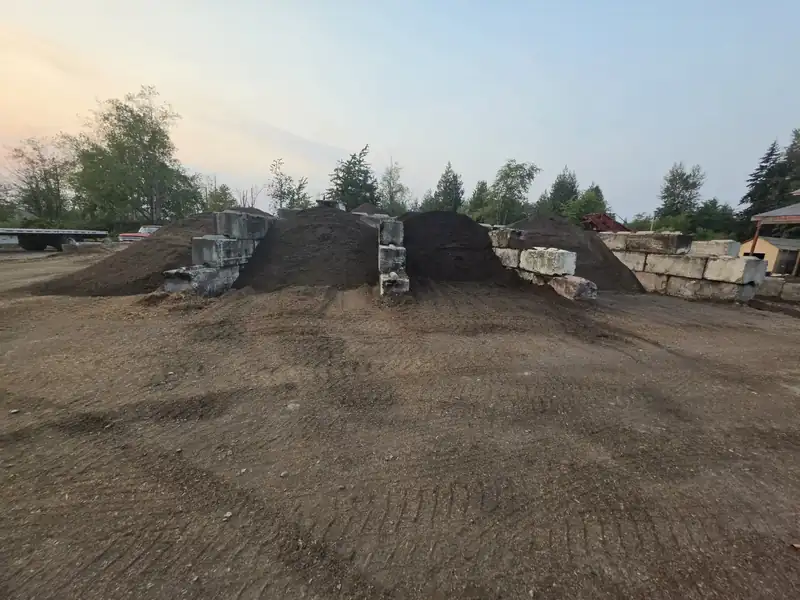
A bulk order becomes a pile that must be safely placed and then moved. Before checkout, identify a firm dump location, keep it clear of vehicles, septic systems, soft shoulders, structures, and overhead hazards, and decide how wheelbarrows or equipment will reach the project.
Bagged may fit when
- The quantity is small.
- Access is through a house, gate, or narrow path.
- Material must be moved in controlled units.
- A bulk pile cannot be stored safely.
Bulk may fit when
- The project needs several cubic yards.
- The property can receive a pile.
- Pickup or delivery is practical.
- You want to reduce individual package handling.
Pickup vs. delivery
Pickup requires a suitable vehicle or trailer and knowledge of its actual payload—not just bed dimensions. Delivery becomes more attractive as volume, weight, distance, and repeated-trip time increase. Specialty Soils matches the delivery truck to material, quantity, route, and site conditions; customers do not select the truck.
Before delivery day
- Confirm the product and calculated quantity.
- Provide the delivery address and honest access information.
- Move vehicles, unlock gates, and check overhead clearance.
- Mark the preferred unloading location while recognizing that driver safety controls the final placement.
- Plan labor and equipment for moving the pile after delivery.
Truckload planning is an estimate
The Truckload Planner uses current centralized planning capacities. Final truck, load split, service availability, and price are confirmed for the real order. Start with the Calculator Center, then review delivery and access requirements.
Take the next planning step
Use the project, product and quantity paths that match what you are actually buying.
Sources & references
General horticultural guidance is supported by the following authoritative resources. Specialty Soils product statements and labeled company observations are first-party information.